


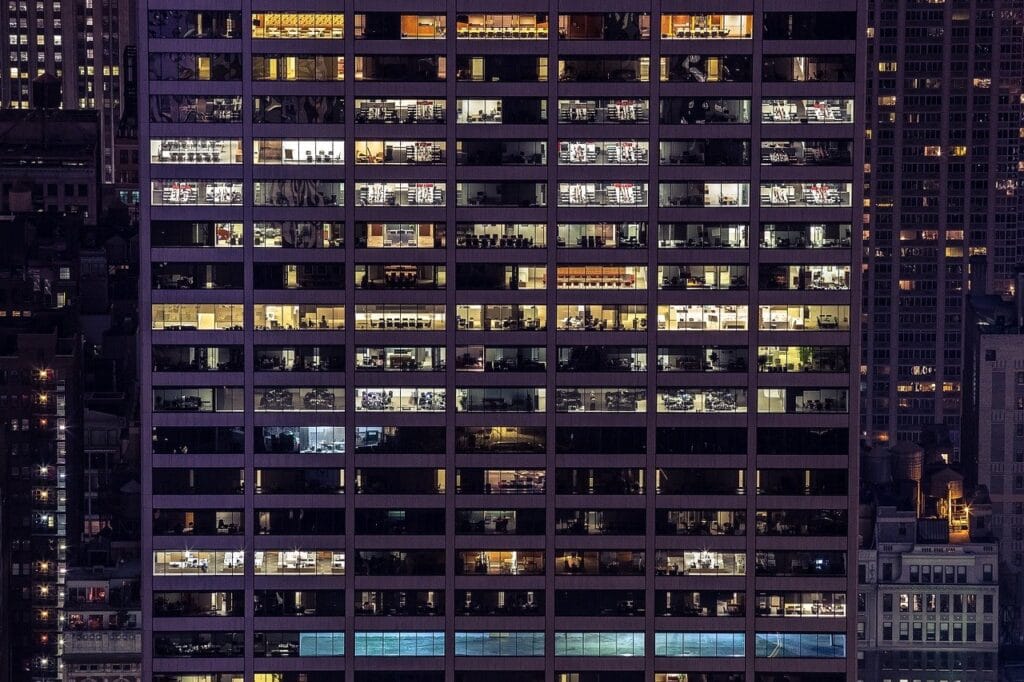
It is not the first time in history that cities and buildings have to be reinvented or redesigned to adapt to new lifestyles due to an illness. What makes it different COVI-19 It is the global impact and the new forms of work generated thanks to the appearance of the internet.

Until now, millennials had changed the way we work.down and doing business, as well as also lthe work spaces. Traditional offices were giving way to open spaces that allow work to be carried out in comfortable environments that enhance and optimize work. Architecture had joined the movement “bringing the home to the office”, with the creation of work spaces that generate peace and tranquility, which reduces the stress and anxiety of workers in those spaces. There were many companies that used the design and equipment of their facilities.lations to attract and retain the best human resources by putting at your service comfortable and homely spaces in which you can carry out your tasks.
And now what's gonna happen? Confinement is showing that many tasks do not require physical presence in the office continuously, since new technologies allow us toThey can stay connected, have meetings or contact clients without leaving home.

If this trend is confirmed, when creating spaces, architects will have to reinvent spaces again, always based on needs.
In the previous entry we talked about the redistribution of space in the home, after the new vision that confinement is giving us regarding its needs. Today we will dedicate ourselves to seeing what the new work spaces can be like after of COVI-19.
No one is unaware that there is a possibility that we will encounter similar situations again.ares we are living in, and It is more likely that technological developments will be launched that prevent infections. There will surely be an increase in automation that helps avoid contagion: automatic doors, voice-activated elevators, hands-free switches, temperature control machines...

The design of work spaces will also have to take into account the distances between workstations and the use of materials with little or no chance of contagion.
Almost all specialists agree on the new approach with which bathrooms in public spaces must be designed. The trend will be to eliminate doors as much as possible, using antibacterial fabrics and finishes such as copper, and others that will be developed; just as these are self-cleaning, creating small modular spaces that can be quickly disinfected.
The design and renovation of space in hospitals should be a vital issue to take into account once confinement has ended. But that may be a topic for the next entry.
Let's continue being prudent.